
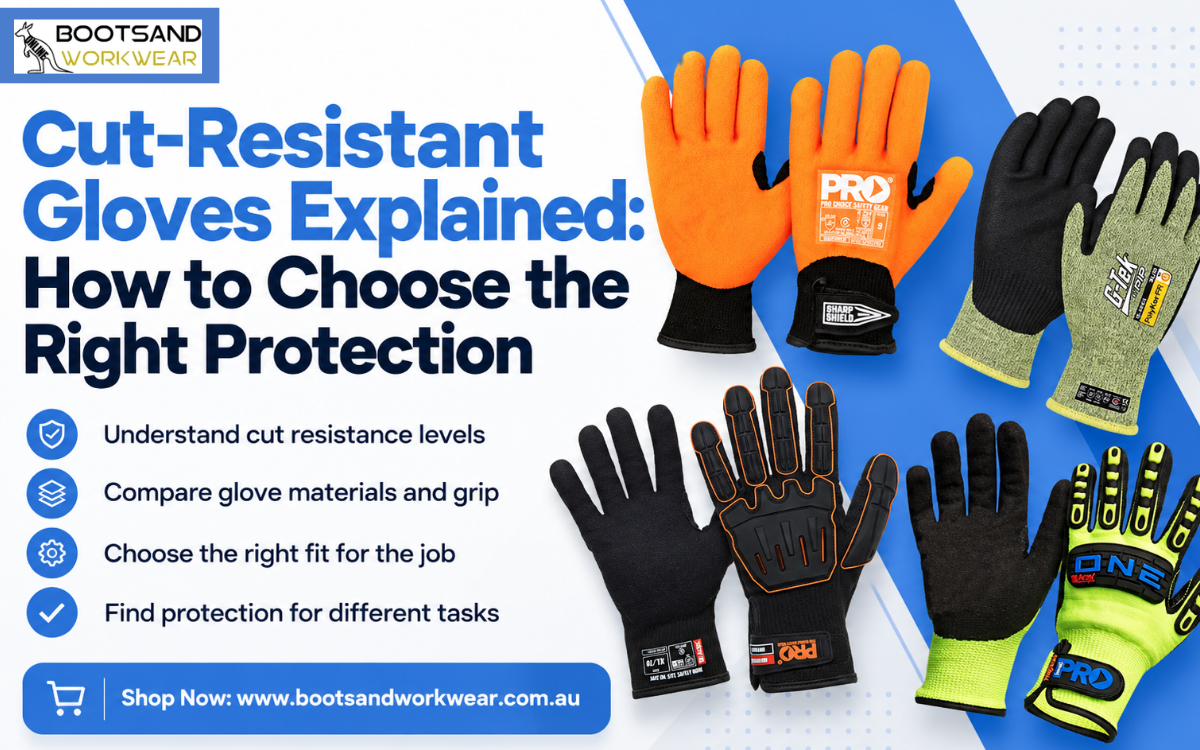
Working with sharp materials can expose your hands to injuries, whether you're handling sheet metal, glass, construction tools or industrial equipment. Even routine tasks can become hazardous when workers lack suitable protective equipment. Choosing the right gloves is an important part of reducing these risks while maintaining comfort and control throughout the working day.
For Australian workers, selecting cut resistant gloves requires more than finding a durable-looking pair. Different gloves provide different levels of protection, grip and flexibility. Understanding cut-resistance ratings, materials and workplace requirements can help you make a more informed purchasing decision.
What Are Cut-Resistant Gloves?
Cut-resistant gloves are protective gloves designed to reduce the likelihood or severity of injuries caused by contact with sharp edges and materials. They are widely used in construction, manufacturing, metal fabrication, warehousing and maintenance.
Unlike ordinary fabric gloves, these products incorporate specialised materials that resist cutting forces.
Common materials include:
- High-Performance Polyethylene (HPPE): A lightweight, strong fibre commonly used in cut-resistant glove construction.
- Aramid Fibres: Strong synthetic fibres used in certain protective gloves.
- Fibreglass Blends: Reinforcing fibres that can increase cut resistance when incorporated into specialised yarns.
- Steel Fibre Blends: Used in some designs to provide additional resistance against sharp edges.
- Protective Palm Coatings: Nitrile, latex and polyurethane coatings may improve grip and handling performance.
The right material depends on the task, environment and level of protection required.
Importantly, no glove is completely cut-proof. Workers must continue following appropriate handling procedures and workplace safety requirements.
How Do Cut-Resistant Gloves Work?
Cut-resistant gloves use specially engineered fibres and knitted constructions to resist damage when exposed to sharp edges.
High-strength yarns help distribute and resist cutting forces. Some designs incorporate reinforcing materials, while others use advanced fibre combinations to balance flexibility and protection.

For example, a warehouse worker handling cartons may prefer lightweight gloves that allow easy finger movement. A metal fabrication worker handling sharp components may require a higher cut-resistance rating.
The level of protection depends on the glove's construction and tested performance, not simply its thickness.
Choosing the highest-rated glove without considering comfort, dexterity or the task may not always be the most practical approach.
Understanding Cut-Resistance Levels: A to F
Cut-resistance ratings help buyers compare the protective performance of different gloves.
EN 388 is a recognised European standard covering protection against mechanical risks. Its EN ISO 13997 straight-blade cut test classifies gloves from Level A to Level F.
|
Cut Level |
Minimum Test Force |
Protection Rating |
|
A |
2 Newtons |
Lower cut resistance |
|
B |
5 Newtons |
Moderate cut resistance |
|
C |
10 Newtons |
Increased cut resistance |
|
D |
15 Newtons |
Higher cut resistance |
|
E |
22 Newtons |
Very high cut resistance |
|
F |
30 Newtons |
Highest classification within this test |
A higher letter indicates greater resistance under the specified laboratory test conditions.
However, a higher rating does not automatically make a glove suitable for every task. Employers should consider the identified hazards, other protective properties and the manufacturer's recommendations.
Australian workplaces should also review applicable AS/NZS 2161 requirements when selecting protective gloves.
Which Cut-Resistant Gloves Are Suitable for Different Jobs?
Different industries require different combinations of protection, comfort and handling performance.
Construction and Building Work
Construction workers frequently handle timber, metal components, tools and building materials.
Suitable gloves may need to provide resistance to cuts and abrasion while allowing workers to maintain a reliable grip.
Breathability and flexibility are also important, particularly during long shifts in Australian weather conditions.
Metal Fabrication and Manufacturing
Workers handling sheet metal, sharp components or freshly cut materials may encounter significant cutting hazards.
Depending on the task, gloves with higher cut-resistance ratings may be appropriate. Additional requirements, such as heat or impact protection, should be assessed separately.
Warehousing and Logistics
Warehouse workers commonly handle cartons, packaging materials, pallets and equipment.
Lightweight protective gloves may help maintain dexterity while providing suitable resistance to cuts and everyday abrasion.
Glass Handling
Glass presents particular risks because sharp edges and broken fragments can cause serious injuries.
Workers may require gloves offering appropriate cut resistance and grip, along with other protective equipment and safe handling methods.
Maintenance and Repair Work
Maintenance workers often move between different tasks involving tools, machinery and potentially sharp materials.
Selecting gloves according to the actual hazards is more effective than assuming one type will be appropriate for every activity.
What Features Should You Look for in Safety Gloves?
Cut resistance is an important factor, but several additional characteristics determine whether gloves are practical for everyday use.
When comparing safety gloves, consider the following features.
1. Grip Performance
A secure grip is essential when handling tools, materials and equipment.
Different palm coatings offer different handling characteristics. For example, nitrile and polyurethane coatings are commonly used in industrial gloves.
Always confirm that the coating is suitable for the working environment, especially where oil or moisture may affect grip.
2. Comfort and Breathability
Uncomfortable gloves can make repetitive tasks more difficult and discourage consistent use.
Lightweight, breathable constructions may improve comfort during extended working periods, particularly in warm environments.
However, comfort should never come at the expense of the protection required for the task.

3. Flexibility and Dexterity
Workers performing detailed tasks need sufficient finger movement to handle small tools and components.
A glove that is too stiff may reduce control and make certain activities harder to perform safely.
4. Proper Fit
Correct sizing affects comfort, grip and overall handling.
Gloves that are too loose can interfere with movement, while excessively tight gloves may cause discomfort and restrict flexibility.
Always consult the manufacturer's sizing guide before purchasing.
5. Additional Protection
Some workplaces require protection against more than cuts.
Depending on the task, workers may also need resistance to abrasion, punctures, impacts, chemicals or heat.
Check that the selected gloves are specifically suitable for every relevant hazard.
Cut-Resistant vs Puncture-Resistant Gloves: What's the Difference?
Although these glove types both address mechanical hazards, they provide protection against different risks.
|
Feature |
Cut-Resistant Gloves |
Puncture-Resistant Gloves |
|
Main purpose |
Resist cuts from sharp edges |
Resist penetration by pointed objects |
|
Common hazards |
Sheet metal, glass edges, sharp materials |
Nails, sharp points and penetrating objects |
|
Relevant testing |
Blade cut-resistance testing |
Puncture-resistance testing |
|
Main limitation |
Not completely cut-proof |
General puncture ratings do not guarantee needle protection |
A glove with a high cut rating may not provide suitable protection against needles.
Workers exposed to needle-stick hazards should use gloves specifically designed and tested for those risks.
How to Choose the Right Gloves for Your Workplace
Choosing protective gloves should begin with a workplace hazard assessment.
Follow these practical steps:
- Identify workplace hazards: Determine whether workers encounter sharp edges, rough surfaces, puncture risks or additional hazards.
- Review protection ratings: Check the tested performance of the gloves against the identified risks.
- Consider the working environment: Assess whether moisture, oil, temperature or other conditions affect glove performance.
- Evaluate comfort and flexibility: Ensure workers can perform their tasks without unnecessary restriction.
- Choose the correct size: Follow manufacturer measurements and fit recommendations.
- Check product specifications: Confirm that the gloves are appropriate for the intended application.
- Provide appropriate training: Ensure workers understand correct use, glove limitations and replacement requirements.
Protective gloves should support broader workplace safety measures rather than replace safe equipment, procedures or hazard controls.
Special care is necessary around rotating machinery, where unsuitable gloves can create entanglement hazards.
How to Maintain and Replace Cut-Resistant Gloves
Protective gloves may lose effectiveness through repeated use, contamination or physical damage.
Regular inspection helps identify gloves that should no longer be used.
Look for:
- Holes, tears or damaged stitching.
- Excessive wear around the fingertips and palms.
- Cracked or damaged protective coatings.
- Loss of fit or flexibility.
- Contamination that affects safe handling.
- Any other damage identified in manufacturer instructions.
Cleaning should follow the manufacturer's recommendations because different glove materials require different care methods.
Replace gloves when damage, contamination or deterioration makes their protective performance uncertain.
Why Choose Boots & Workwear for Hand Protection?
Choosing a workwear supplier involves more than comparing prices. Access to different protective products, established brands and clear product information can help buyers find equipment suited to their requirements.
Boots & Workwear is an Australian-owned and operated online retailer offering workwear, personal protective equipment and workplace safety products.
Here are several reasons to explore its hand-protection range.
Wide Range of Hand Protection Products
Boots & Workwear provides different categories of protective gloves, including cut-resistant, chemical-resistant, disposable, mechanics, welding and impact-protection options.
This variety allows customers to compare products according to their workplace needs rather than relying on a single glove type.
Recognised Safety Equipment Brands
The store lists products from established brands such as G-Tek, Pro Choice and Eureka.
Customers can compare available materials, glove constructions and manufacturer-provided protection ratings before choosing suitable products.
Options for Different Industries
Construction workers, maintenance teams, warehouse employees and industrial buyers have different hand-protection requirements.
The available product categories make it easier to explore gloves designed for different tasks and operating conditions.
Convenient Online Product Selection
Customers can browse products, review available sizes and compare listed specifications through the Boots & Workwear website.
If you're reviewing protective equipment for your team, explore the available hand protection gloves and check individual product specifications to identify options suited to your workplace.
Conclusion
Selecting suitable cut-resistant gloves starts with understanding the hazards involved in your work.
While cut-resistance ratings provide useful information, grip, comfort, flexibility, correct sizing and additional protective features are equally important considerations.
By comparing tested performance and manufacturer recommendations, workers and businesses can make better-informed decisions about hand protection.
Whether you work in construction, manufacturing, warehousing or maintenance, choosing gloves that match the task and following safe working practices can help reduce the risk of hand injuries.