
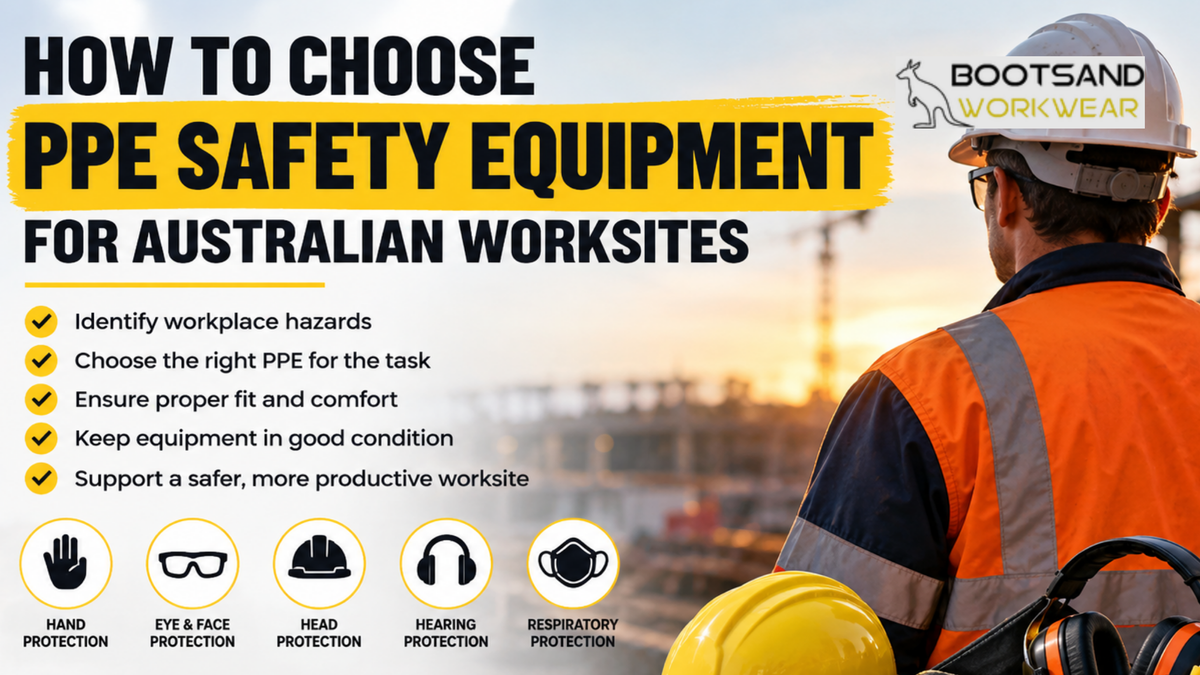
Personal protective equipment is an important part of workplace safety across construction, manufacturing, warehousing, maintenance, mining, transport and many other Australian industries. However, simply having PPE available does not mean workers have the right protection. Equipment should be selected according to the hazards, tasks, environment and requirements of each job.
Choosing suitable PPE safety equipment starts with understanding what workers may be exposed to during their shift. Dust, noise, sharp materials, flying particles, chemicals, heat and falling objects can all require different forms of protection. Taking a task-based approach can help businesses and workers choose practical equipment instead of relying on the same PPE for every situation.
Start With the Hazards on Your Worksite
Before buying PPE, consider what can realistically cause harm during the work being performed. A warehouse worker, welder, construction worker and machine operator may all require different combinations of protection.
A workplace assessment may identify hazards such as:
- Falling or moving objects
- Flying particles and debris
- Dust and airborne contaminants
- Excessive workplace noise
- Sharp materials and rough surfaces
- Chemical splashes
- Heat or sparks
- Repetitive handling
- Outdoor sun exposure
- Machinery and equipment
Once hazards have been identified, it becomes easier to determine which PPE gear is appropriate for individual tasks.
PPE should also be considered as part of a broader workplace risk-management approach rather than the only safety measure. Work procedures, training, engineering controls and other measures may also be required depending on the hazard.
Choose PPE for the Task, Not Just the Job Title
Two people with the same job title may perform different tasks during the day. For example, a maintenance worker might use hand tools in the morning, operate machinery later and work in a dusty area during another part of the shift.
Instead of choosing one standard set of PPE based solely on occupation, look at individual activities.
Ask questions such as:
- What task is being performed?
- Which body areas may be exposed?
- How long will the worker face the hazard?
- Is the work indoors or outdoors?
- Does the task involve dust, chemicals, heat or noise?
- Does the equipment need to work with other PPE?
- Are there site-specific requirements?
This approach can make PPE selection more relevant to actual working conditions.
Consider the Main Types of Workplace PPE
Australian worksites may require several forms of personal protection. Boots & Workwear's current Safety PPE range includes categories covering hand, eye, head, face, hearing and respiratory protection.
Hand Protection
Hands are frequently exposed when workers handle tools, equipment and materials. The appropriate glove depends heavily on the task.
Different working conditions may call for cut-resistant, chemical-resistant, disposable, welding, mechanics, needle-resistant, impact-protection or other specialised gloves. Boots & Workwear lists these as distinct hand-protection categories, allowing buyers to narrow their selection according to the work involved.
A glove should provide suitable protection without unnecessarily limiting grip or dexterity.

Eye and Face Protection
Cutting, drilling, grinding and other tasks can produce dust, fragments or flying particles. Other activities may create splash risks.
Depending on the hazard, workers may need safety glasses, goggles, visors or additional face protection. The Safety PPE range includes safety glasses, safety goggles, polarised and non-polarised safety eyewear, plus browguard and visor options.
The choice should reflect the specific exposure rather than appearance alone.
Head Protection
Where there is an identified head-impact or falling-object hazard, suitable head protection may be required. Options can include hard hats, bump caps and related accessories depending on the workplace and task.
Fit is important because poorly adjusted equipment can become uncomfortable or move during work. Workers should also check their PPE regularly for damage or deterioration.
Think About Hearing and Respiratory Protection
Some hazards are less visible but still need careful attention.
Workplaces involving machinery, power tools or other high-noise activities may require hearing protection. Available options can include disposable earplugs, reusable earplugs, headband earplugs and earmuffs.
Respiratory hazards require equally careful assessment. Dust and other airborne contaminants can differ significantly, which means respiratory equipment should be selected for the particular hazard and work environment.
When comparing PPE gear, do not assume that one mask, glove or pair of safety glasses is suitable for every task. Check the product information, workplace requirements and relevant safety guidance before making a selection.
Make Comfort and Fit Part of the Decision
Protection is the priority, but fit and comfort also matter. Workers may wear PPE for extended periods, sometimes while bending, lifting, climbing or performing detailed tasks.
Poorly fitting equipment can interfere with normal movement or make it more difficult to complete a job comfortably.
When assessing PPE, consider:
- Correct sizing and adjustment
- Worker mobility
- Grip and dexterity
- Compatibility with other equipment
- Weight and bulk
- Ventilation where relevant
- Ease of putting on and removing the item
For example, safety eyewear should work comfortably with other required equipment, while gloves should provide enough movement for the task they are intended to support.
Check Whether Different PPE Items Work Together
Workers often need more than one form of protection at the same time. A task could require a hard hat, safety glasses, hearing protection, gloves and respiratory equipment.

Each item may work correctly on its own but become less practical when combined with other equipment. Earmuffs, for instance, may need to be compatible with head protection. Safety glasses should not prevent other protective equipment from fitting correctly.
Think of PPE as a complete system rather than a collection of unrelated products.
Inspect, Maintain and Replace PPE Regularly
Selecting suitable equipment is only the beginning. PPE needs to remain in usable condition.
Workers should inspect equipment according to workplace procedures and manufacturer guidance. Items showing significant wear, damage or deterioration may no longer provide their intended protection.
Look for issues such as cracked eyewear, damaged hard hats, worn gloves, stretched straps, damaged seals or heavily contaminated equipment. Disposable products should also be replaced as appropriate rather than treated as permanent equipment.
Businesses can make this easier by maintaining suitable replacement stock for frequently used items.
Why Choose Boots & Workwear for Safety PPE?
Boots & Workwear is an Australian-owned and operated supplier offering workwear and safety products for Australian workers and businesses. Its online Safety PPE collection currently includes hundreds of products across hand, eye, head, face, hearing and respiratory protection, with brands represented on the site including Pro Choice, G-Tek, Eureka and Grippaz.
Having multiple workplace safety categories available from one supplier can make it easier to compare options and organise equipment for individuals or crews. Beyond PPE, Boots & Workwear also offers workwear, hi-vis clothing, work pants and other workplace essentials, helping customers build a more complete work setup in one place.
Build a PPE Setup Around Real Workplace Needs
The best PPE selection starts with the work, not the product. Identify the hazard first, consider the level and type of exposure, then choose equipment designed for that particular situation. Fit, compatibility, maintenance and worker comfort should all form part of the decision.
Whether you are replacing worn equipment, preparing for a new role or organising supplies for a team, explore suitable protective clothing and equipment based on the actual conditions workers face. A considered approach can help create a PPE setup that is practical for everyday use while supporting broader workplace safety procedures.
Frequently Asked Questions
What PPE safety equipment is commonly used on Australian worksites?
The equipment required depends on the hazards present. Common categories include gloves, safety glasses and goggles, hard hats, face protection, hearing protection and respiratory equipment. Workers may require several items at once depending on their tasks.
How do I choose the right PPE gear?
Start by identifying the workplace hazard and the task being completed. Then consider the required level of protection, fit, comfort, compatibility with other equipment and any applicable workplace or regulatory requirements.
Can the same PPE be used for every job?
Not necessarily. Different tasks can expose workers to different hazards. A glove designed for general handling, for example, may not be appropriate for chemical exposure, cutting hazards or high-heat work.
When should PPE be replaced?
PPE should be inspected and replaced when it is damaged, excessively worn, contaminated, past any applicable service life, or no longer functioning as intended. Always follow the manufacturer's instructions and workplace procedures.
Where can Australian workers buy PPE and workwear online?
Boots & Workwear provides an online range of workplace safety equipment alongside hi-vis clothing, general workwear, work pants and related products for Australian workers and businesses.