
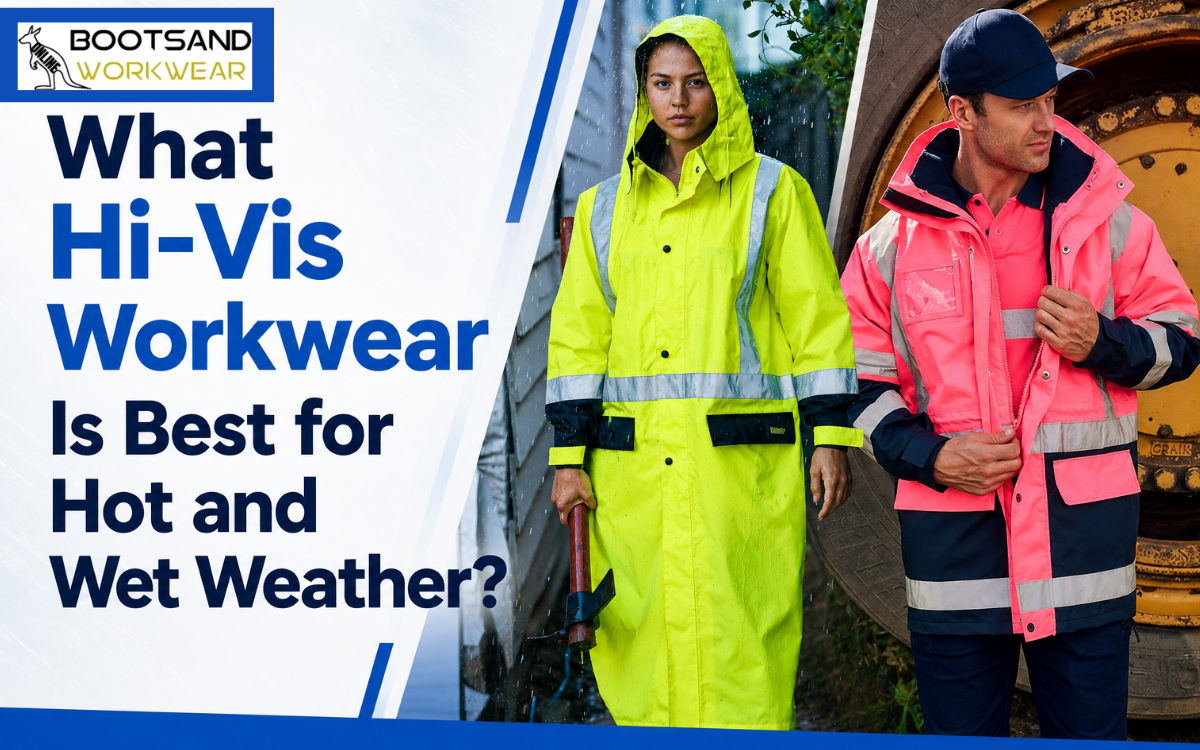
Australian worksites can shift from intense heat to sudden rain within the same day. For construction workers, road crews, landscapers and other outdoor professionals, choosing the right clothing is essential for remaining visible and comfortable. The best hi-vis workwear for changing weather should balance breathability, weather protection, movement and workplace visibility.
A heavy waterproof jacket may be useful in persistent rain, but it can quickly become uncomfortable during warm, active work. A lightweight shirt may feel cooler in summer, but it may not provide enough protection when wind and rain arrive. The practical solution is to select garments according to the weather, workplace and activity level, then use layers that can be added or removed during the shift.
Why Weather-Suitable Hi-Vis Workwear Matters
When garments trap heat, restrict movement or remain wet for long periods, workers can become uncomfortable and distracted. Clothing suited to the conditions supports movement, temperature management and visibility around machinery, vehicles and other workers.
Hot conditions require airflow and moisture management, while wet conditions require protection from rain and wind. In mixed weather, workers need clothing that handles both without becoming unnecessarily heavy.
Best Hi-Vis Workwear for Hot Weather
Choose Lightweight, Breathable Fabrics
For hot days, lightweight shirts, polos and T-shirts are generally more practical than thick garments. Breathable fabric allows air to move around the body, helping reduce uncomfortable heat build-up during active work.
Look for garments with:
- Lightweight fabric construction
- Ventilation panels or mesh sections
- Moisture-wicking properties
- A comfortable fit that allows airflow
- Short-sleeve and long-sleeve options
- Fabric suitable for regular washing
A loose but correctly fitted garment can feel more comfortable than clothing that is extremely tight. However, it should not be so loose that it catches on tools, equipment or moving parts.
Consider Long Sleeves for Outdoor Work
Short sleeves can improve airflow, but long-sleeve hi-vis shirts may suit workers exposed to direct sunlight, dust, vegetation or rough materials. Lightweight long sleeves provide extra coverage while remaining practical in warm conditions.
Workers should consider their job location, sun exposure and workplace requirements before choosing between short- and long-sleeve styles.
Look for Ventilated Designs
Ventilation zones under the arms, across the back or along the sides allow heat to escape. These garments are useful for construction crews, landscapers, road workers, delivery drivers and tradespeople who remain active outdoors.
Best Hi-Vis Workwear for Wet Weather
Select Water-Resistant or Waterproof Outerwear
Water-resistant garments can suit light showers or short exposure, while waterproof jackets are generally more suitable for extended outdoor work.
Effective high visibility workwear for wet conditions may include jackets, raincoats, shell layers and waterproof pants. The right combination depends on how long the worker will be outside and how much movement the job requires.
Before buying, consider whether the garment includes:
- Sealed or protected seams
- A storm flap over the zip
- Adjustable cuffs and a practical hood
- Secure pockets
- Ventilation features
- Reflective details suited to the workplace
Prioritise Breathability
A waterproof garment can still become uncomfortable if heat and moisture cannot escape. Workers performing physical tasks should look for outerwear that combines rain protection with ventilation.
Breathable panels, underarm openings and adjustable closures can help manage internal heat. Correct sizing is also important because a jacket that is too tight may reduce airflow and limit movement.
Protect the Lower Body
Workers exposed to ongoing rain may also need waterproof overpants or suitable work trousers. Wet pants can become heavy and restrictive, especially when kneeling, climbing or walking over uneven ground.
Waterproof overpants should fit over normal trousers without excessive bulk. Adjustable hems or side openings can make them easier to put on over work boots.
Layering for Changing Conditions
Layering is one of the most practical ways to prepare for unpredictable weather. Rather than relying on one heavy garment, workers can combine lighter pieces and adjust them as conditions change.
Base Layer
A lightweight hi-vis shirt or moisture-managing top can support airflow and comfort in warm weather.
Mid-Layer
A light fleece, jumper or hoodie can provide warmth during cool mornings or windy periods. It should be easy to remove when temperatures rise.
Outer Layer
A water-resistant or waterproof jacket protects against rain and wind. It should fit over the layers underneath without restricting reaching, bending or lifting.
This approach allows workers to begin a cool morning with several layers, remove the mid-layer as the day warms and quickly add the outer shell when rain begins.
How to Choose the Right Garment for Your Job
Weather is only one part of the decision. The garment must also suit the tasks, hazards and visibility requirements of the workplace.

Before purchasing, ask:
- Will the work be indoors, outdoors or both?
- Is the worker active throughout the shift?
- How long will they be exposed to rain?
- Are vehicles or heavy machines operating nearby?
- Is reflective tape required for low-light work?
- Will the garment be worn over other layers?
- Are there workplace uniform requirements?
Employers should consider consistency across the team. Providing suitable options for summer and wet weather can help maintain a professional appearance while allowing workers to dress appropriately.
Fit, Movement and Practical Features
Even a technically suitable garment will not perform well if it does not fit correctly. Hi-vis clothing should allow workers to bend, climb, reach and operate tools without pulling across the shoulders or waist.
Secure pockets, adjustable cuffs, strong zips and reinforced stitching can improve everyday practicality. Wet-weather jackets should also leave enough room for a shirt, jumper or hoodie underneath.
Caring for Hi-Vis Clothing
Follow the care label and avoid washing methods that could damage reflective elements or waterproof coatings. After a wet shift, allow jackets and pants to dry fully before storing them.
Inspect garments for damaged seams, worn fabric, broken fasteners or heavily faded areas. Replace clothing when its fit, visibility or weather protection is no longer suitable for the job.
Why Choose Boots & Workwear Australia?
Boots & Workwear Australia provides workers and businesses with a broad selection of hi-vis clothing for different roles, seasons and environments. The range includes tees, polos, shirts, jackets, jumpers, hoodies, overalls and safety vests, with options for men and women. Customers can compare practical styles and select garments suited to hot days, wet conditions or year-round use.
As a specialist workwear supplier, the company offers practical products for Australian workers, convenient online ordering and options across different price ranges. Whether buying one garment or fitting out a team, customers can explore products according to their work conditions, preferred fit and required features.
Final Thoughts
The best hi-vis workwear for hot and wet weather is not one garment. It is a flexible combination of breathable shirts, practical mid-layers and weather-resistant outerwear. Hot conditions call for lightweight fabrics and ventilation, while wet conditions require reliable rain protection without trapping unnecessary heat.
By considering the weather, activity level, workplace hazards, fit and layering needs, workers can choose clothing that supports visibility and comfort throughout the shift. Suitable seasonal garments can also help teams remain prepared when Australian weather changes unexpectedly.